How Nest Is Building the Business Infrastructure the Global Artisan Economy Never Had
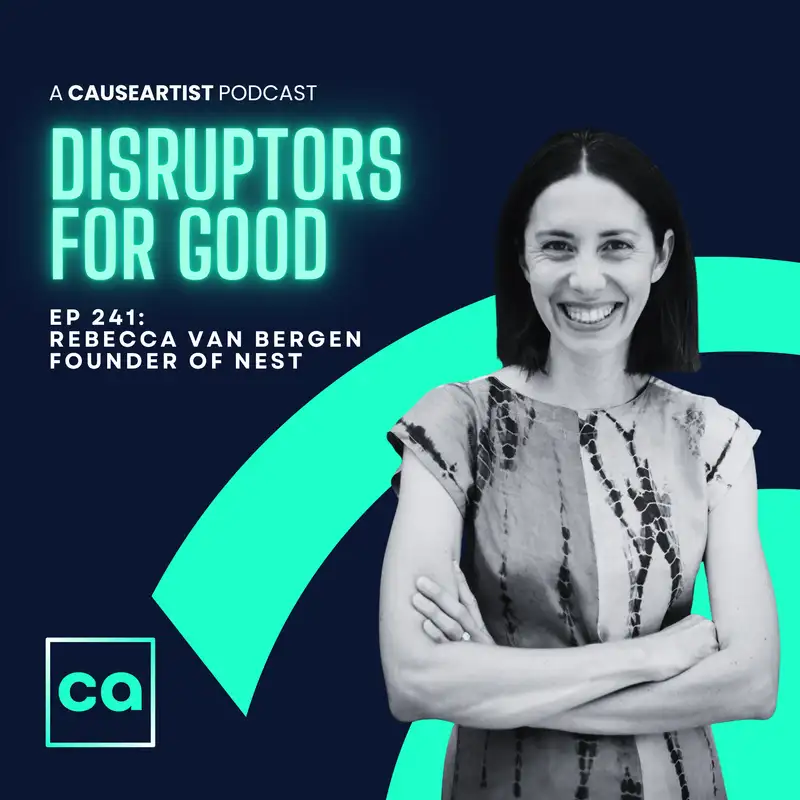
Rebecca Van Bergen, founder of Nest, joins Causeartist to discuss 20 years of building business and financial infrastructure for artisan and maker economies across 123 countries. The conversation covers how Nest supports micro and small creative businesses, the structure of their accelerator programs, the Makers Future Fund in partnership with Etsy and Pinterest, and why the handmade economy may be more durable than most people assume.
Guest
Rebecca Van Bergen is the founder of Nest, a nonprofit organization that provides business development support, financing, and market access to artisan and maker businesses globally. Nest operates in 123 countries and supports over 4,000 micro and small businesses through its Artisan Guild, e-learning platform, and cohort-based accelerator programs.
Topics Covered
- The founding of Nest in 2005 and its connection to the early microfinance movement
- Why loans alone are insufficient without business education and market access
- The scale and data challenges of the global handcraft economy
- How the Artisan Guild works and who it serves
- The structure of Nest's business accelerators, including the sustainability-focused cohort and the UNHCR refugee artisan program
- Why grants paired with education outperform education alone
- The Makers Future Fund: capital and financial literacy for US maker businesses
- How Etsy and Pinterest contribute as funders and recruitment networks
- The ripple effects of artisan income on women, families, and communities
- Lessons from 20 years of running a nonprofit social enterprise
- The intrapreneurship opportunity inside large companies
- Why AI and automation may accelerate demand for handmade goods
Key Insights
Financing is consistently the top need reported by guild members across every geography. The Makers Future Fund was built specifically to address that gap for US-based maker businesses who have no viable path to formal credit.
Nest pairs every accelerator with a small business grant. Business advice without capital to act on it has limited value. The grant closes that gap.
The artisan economy is extremely difficult to quantify because most transactions occur in the informal economy. That data gap has historically caused the sector to be dismissed as niche and non-scalable. Nest's network of 4,000 businesses is part of how the organization builds a more accurate macro picture.
Rebecca's framework for social entrepreneurs: stop looking at the 20-year horizon. Look at your feet, do three concrete things today, and repeat. Twenty years of that compounds into real distance.
As AI proliferates, Rebecca sees a counter-movement building. People increasingly want objects made by human hands. She expects the market to develop two coexisting extremes: robotically produced goods and deeply human handcraft. Both will persist.
Organizations and Programs Mentioned
- Nest Artisan Guild
- Nest Connect (e-learning platform)
- Makers Future Fund
- Makers United
- UNHCR refugee artisan accelerator program
- Etsy
- Target
- Novica
- 10,000 Villages
- Muhammad Yunus / microfinance
----------------------------------------
Disruptors for GOOD is powered by Causeartist, a nonprofit media company dedicated to bridging the gap between capital and culture by spotlighting founders, investors, and organizations reimagining how business can serve people and the planet.
Through storytelling, events, and open-access education, Causeartist helps create a shared language of impact, inspiring more founders to build with purpose and more funders to invest with intention.
By amplifying ideas and innovations across industries, Causeartist transforms awareness into action and cultivates a community where paying it forward is part of the foundation for growth.